Working papers

• Unemployment Risk and Entrepreneurship

data_fig2
Jun 2026, Conditional Accept with Minor Revision at Journal of Political Economy Macroeconomics
Abstract:
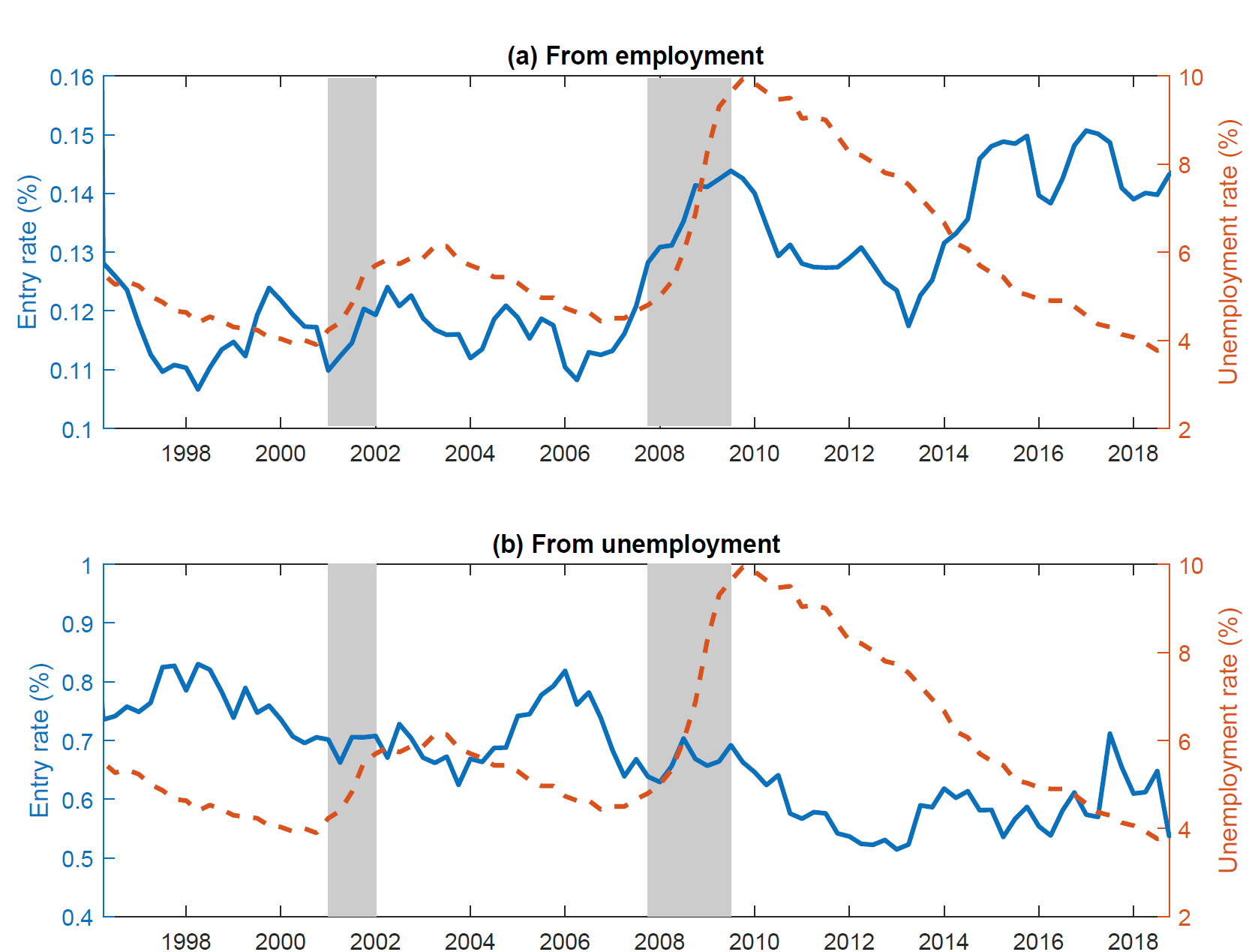
This paper examines the dynamics of entrepreneurial entry during recessions, with heightened unemployment risk. Empirically, I find that in response to increasing unemployment rate, the propensity for employed workers to become entrepreneurs rises, whereas it diminishes for unemployed individuals. I develop an equilibrium search model of entrepreneurship and unemployment with endogenous job destruction. The decision to enter entrepreneurship is influenced by both opportunistic and separation effects, the latter of which is strengthened by higher unemployment risk. I demonstrate that the absence of separation-induced entry would have led to up to two-percentage-point increase in the unemployment rate during the Great Recession

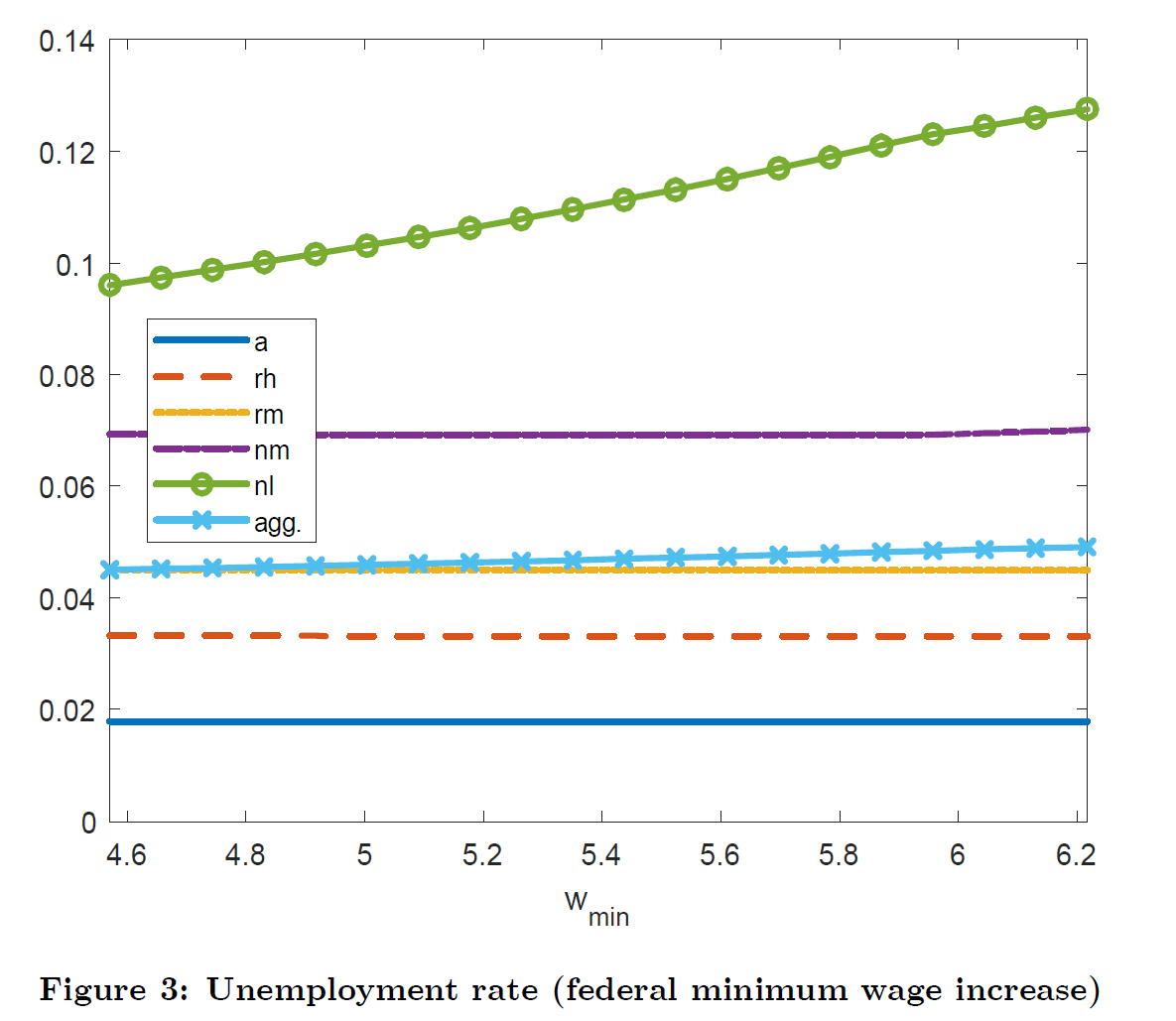
• Minimum Wage in a Multi-Tier Search and Wage-Posting Model with Cross-Market Substitutions (with Ping Wang)

MW_fig3
Nov 2024, Reject and Resubmit at Labour Economics
Abstract:
We develop a general-equilibrium search and wage-posting framework with heterogeneous workers and tasks matching in multi-tier labor markets: abstract, routine high-skilled, routine middle-skilled, manual middle-skilled and manual low-skilled. We incorporate rich cross-market spillovers and compositional effects from individual responses to market thickness. As a result of minimum wage hikes, we show that (i) the unemployment rate at the minimum wage binding market is higher, while all other markets enjoy a lower unemployment rate; (ii) employment in the manual low-skilled jobs is lower, whereas employment in the routine high-skilled and manual middle-skilled markets is higher due to cross-market substitutions; and, (iii) employment in other markets has ambiguous responses due to conflicting effects on potential worker entry and unemployment. By calibrating the model to fit the U.S. data, we evaluate the impacts of the federal minimum wage hike (2007-2009) and the on-going minimum wage increase in Seattle (2017-2021). We find that the minimum wage effects on employment on the binding markets depend crucially on the magnitudes of spillover and compositional effects and that the employment effects may be weak in a nonbinding market. Moreover, our results suggest that, while both minimum wage hikes reduce aggregate output, they only generate small effects on submarket average and overall average wages.

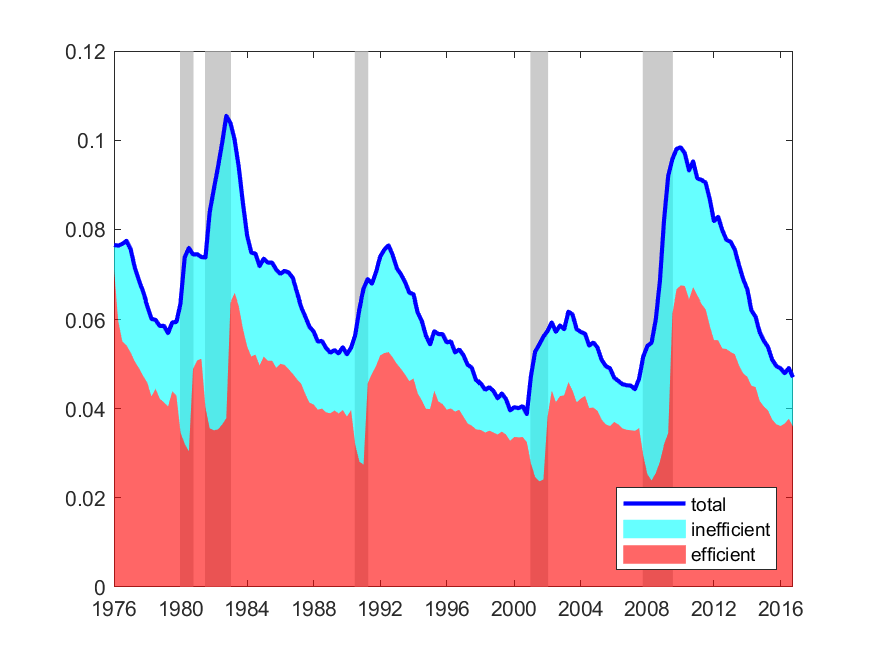
• Inefficient Unemployment and Bargaining Friction

u_decomp
Oct 2025, Revise and Resubmit at Macroeconomic Dynamics
Abstract:
This paper examines how bargaining frictions generate privately inefficient job separations and amplify unemployment fluctuations. I propose a simple specification of bargaining friction by including bargaining wedges in the standard Nash bargaining model. Such bargaining wedges arise when, for example, wages are determined by alternating offers bargaining, which is often used in the literature to generate real wage rigidity, or when there is asymmetric information about worker's productivity. I show that due to the misalignment between actual surpluses and bargaining surpluses, inefficient separations could be generated, which would in turn induce inefficient unemployment. I highlight a distinct amplification mechanism that operates through the separation margin. The existence of inefficient unemployment due to bargaining friction could accentuate the fluctuation of unemployment. Quantitatively, I find that inefficient unemployment accounts for up to 30% of the total unemployment volatility in the calibrated model.

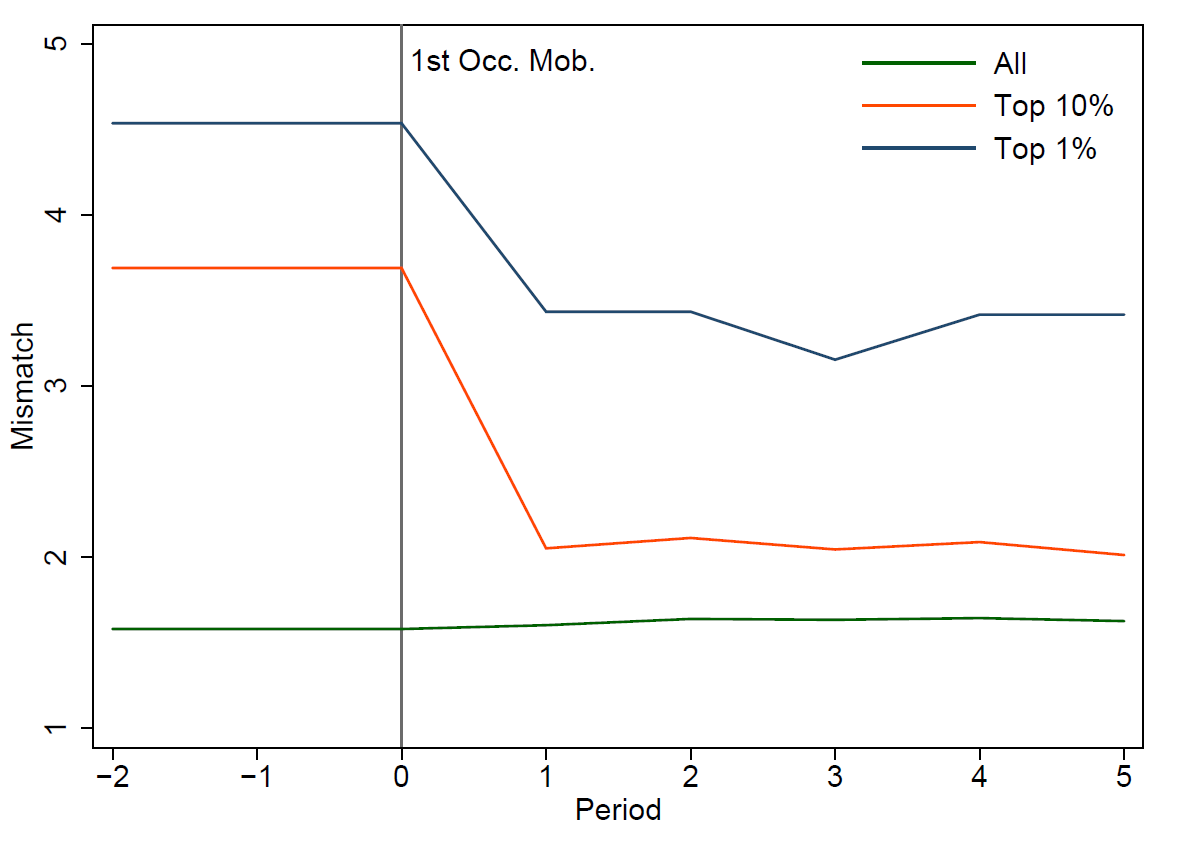
• Moving for Better Skill Match (with Mariana Odio Zúñiga)

occevent79
Oct 2020
Abstract:
This paper studies the connection between multidimensional skill mismatch and labor mobility decisions, and the implications on the aggregate economy thereof. We show empirically that higher skill mismatch induces workers to move to a better matched job. Moreover, labor mobility helps reduce skill mismatch, especially for those previously with high skill mismatch. An equilibrium search model featuring skill mismatch and on the job search is developed. Quantitatively, we find that (i) skill mismatch has an important role to play in affecting the labor mobility decisions, as well as the aggregate economy, (ii) about two-thirds of the total skill mismatch can be accounted for by search frictions, which explain half of the occupational mobility and cost about 1% of the aggregate output and welfare, and (iii) aggregate productivity growth has positive impact on both the skill mismatch and occupational mobility.

PUBLICATIONS

• Health, Crime, and the Labor Market: Theory and Policy Analysis (with Yuki Otsu)

Figure_crimerate
Journal of Economic Dynamics and Control, vol. 144, 2022, article 104529.
Abstract:
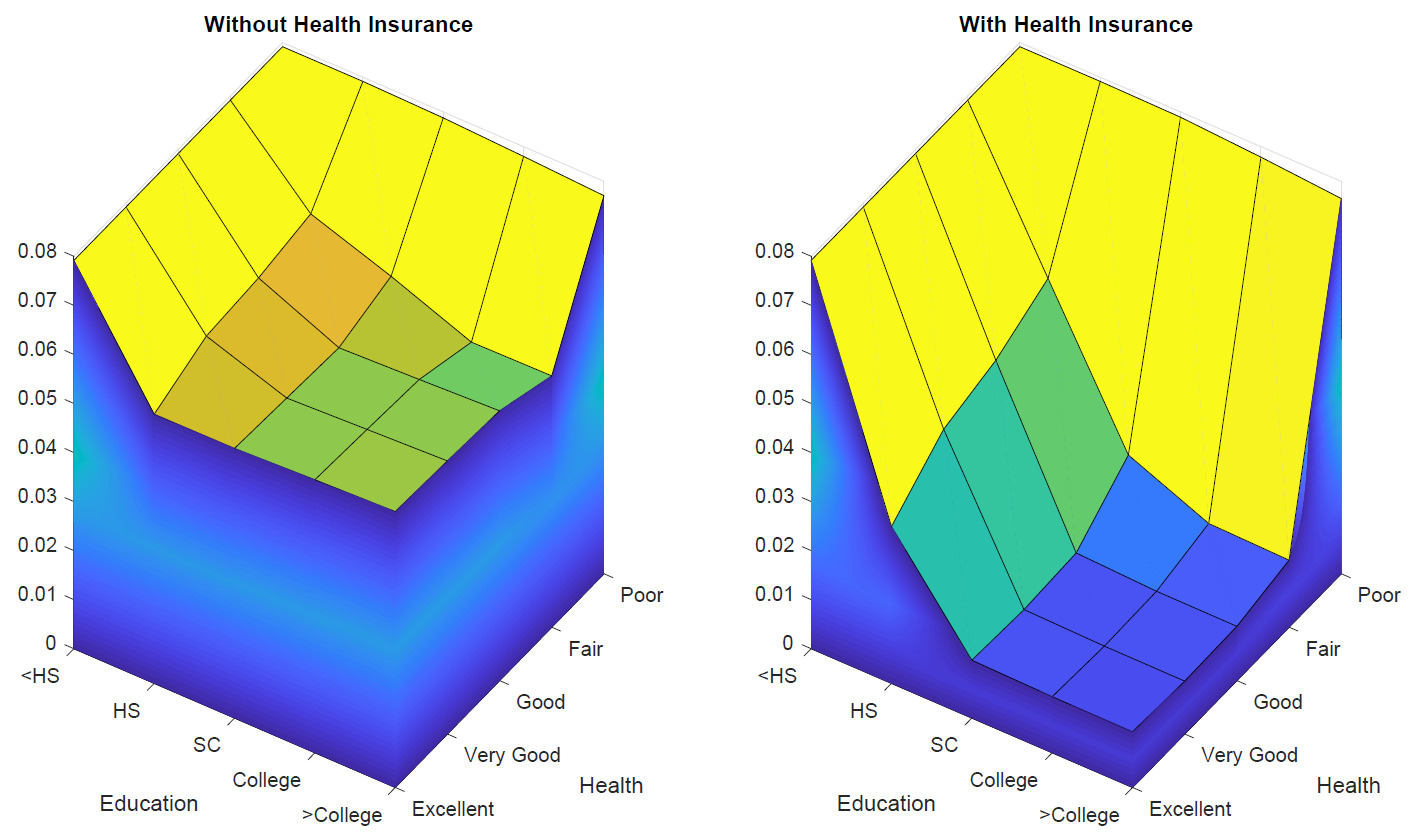
Health has a significant impact on labor market outcomes, and thus on criminal decisions. We document that health positively affects an individual’s wage and employment probability but has a negative effect on criminal activities. To study the economic mechanism behind these findings, we build an equilibrium model of health, crime, and the labor market. We perform public policy experiments in the model and study their impacts on crime and the labor market. We find that by introducing Medicare-for-all, the crime rate in the economy would decrease by one percentage point while the aggregate output would increase by more than 10%.

• Mortality decline, productivity increase, and positive feedback between schooling and retirement choices (with Zhipeng Cai and Sau-Him Paul Lau)

sch
Journal of Demographic Economics, vol. 88, no. 1, Mar. 2022, pp. 121–56.
Abstract:
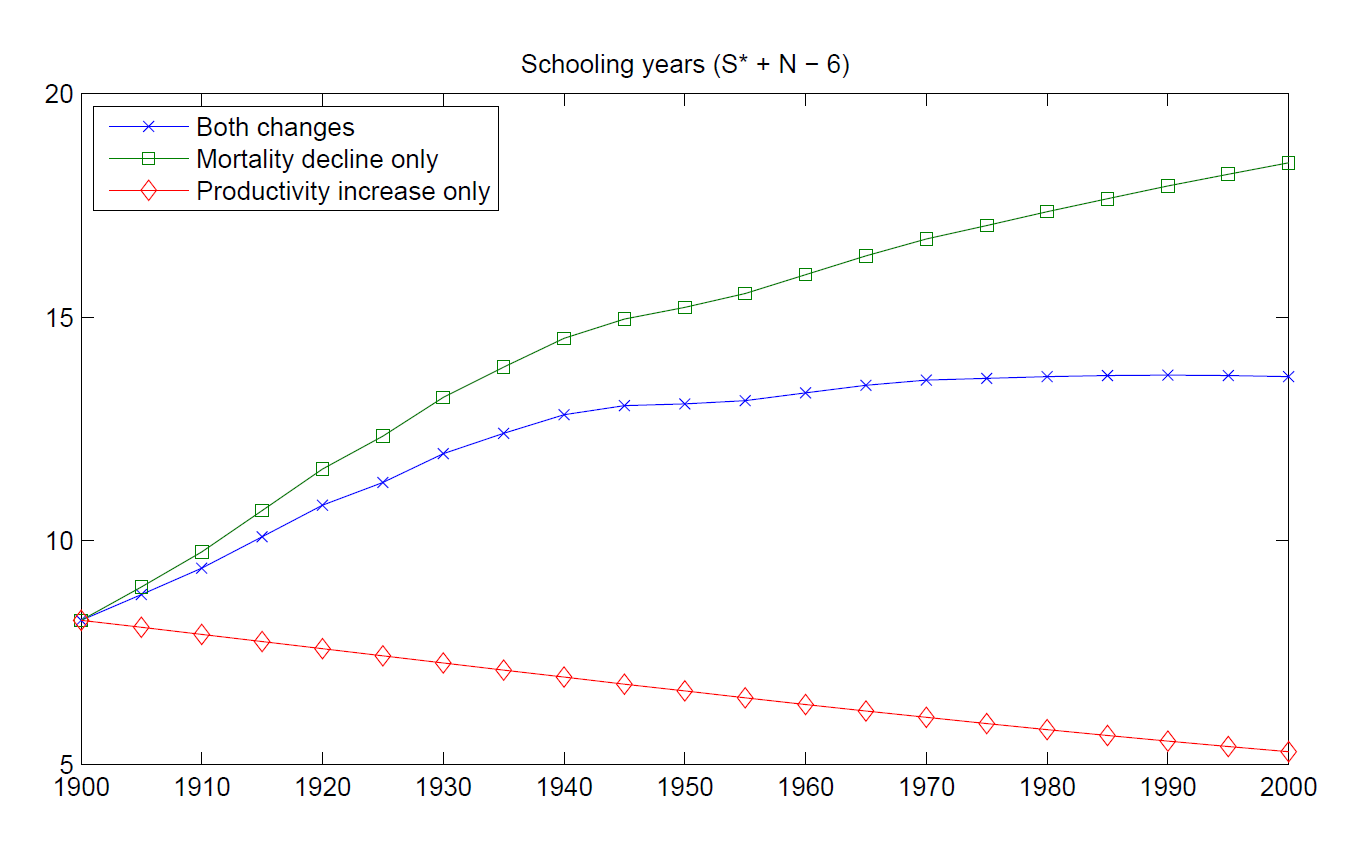
The twentieth century has seen a phenomenal decline in mortality and increase in productivity level. We study the effects of these two important events on optimal schooling years and retirement age. It is shown that positive feedback between these two endogenous variables exists. Because of positive feedback, either a mortality or productivity shock leads to interesting results regarding the sign and magnitude of the effects on the schooling years and retirement age, when some conditions hold. Economic intuitions are developed in a model emphasizing the sole importance of the Ben-Porath mechanism and another model including direct utility benefit of schooling.

• Occupational Mobility and Lifetime Earnings (with Yongseok Shin)

OMLTE_fig1

Federal Reserve Bank of St. Louis Review, Third Quarter 2019, pp. 231-44

Abstract:

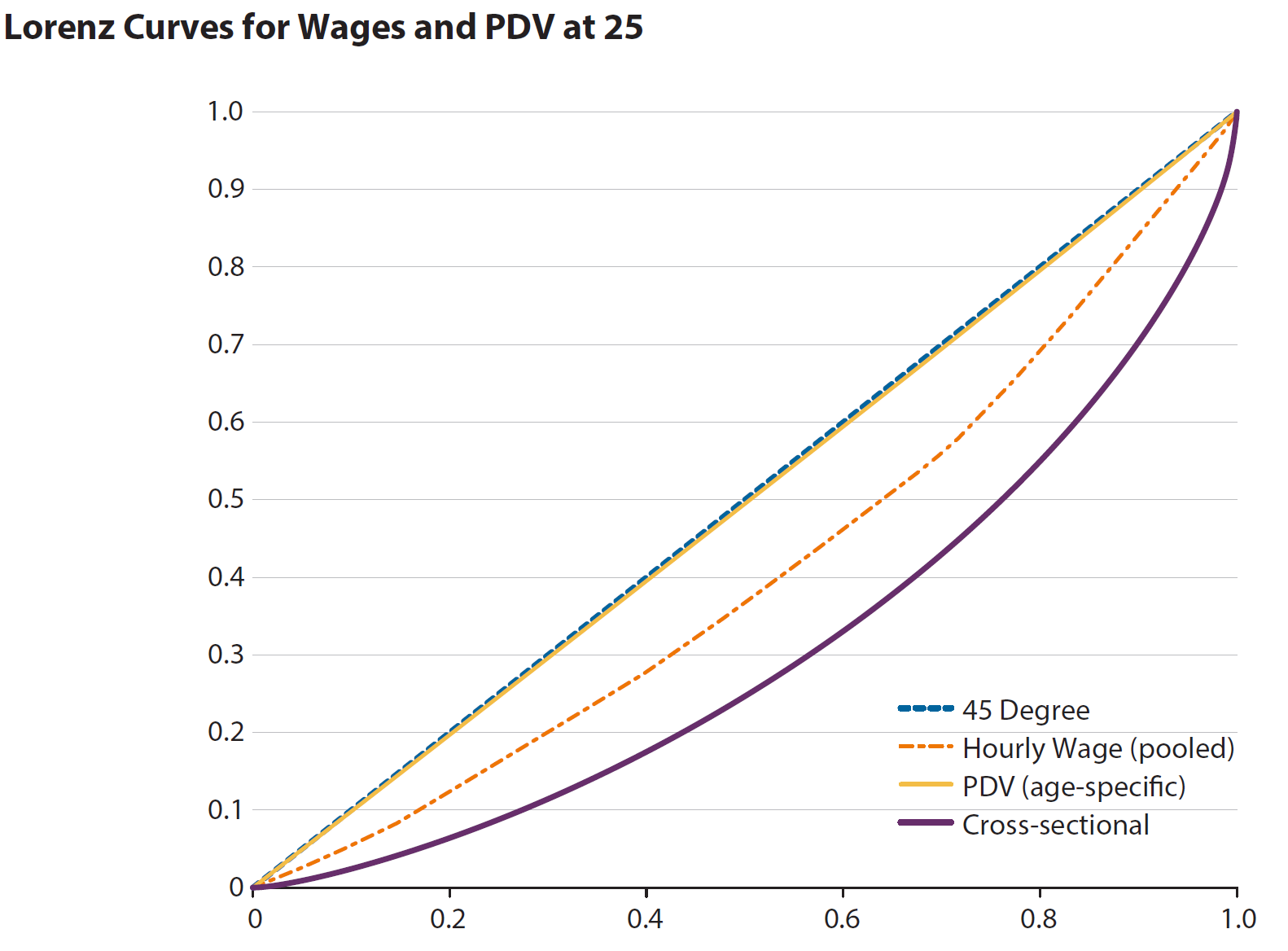
People’s occupations have a significant amount of information about their wages. However, because people—especially young workers—go through multiple occupations and employment statuses during their working lives, we find that their occupations at a young age do not predict their lifetime earnings well. When educational attainment and gender are considered, we find that across education-gender groups the differences in lifetime earnings are even larger than the differences in average occupational wages: Workers in high-wage education-gender groups (men with college degrees, for example) work more (at the extensive margin) and are more likely to have higher-paying occupations.